
Last Updated on December 23, 2025 by Christian Heide
(main photo by Barcelonalemany.com)
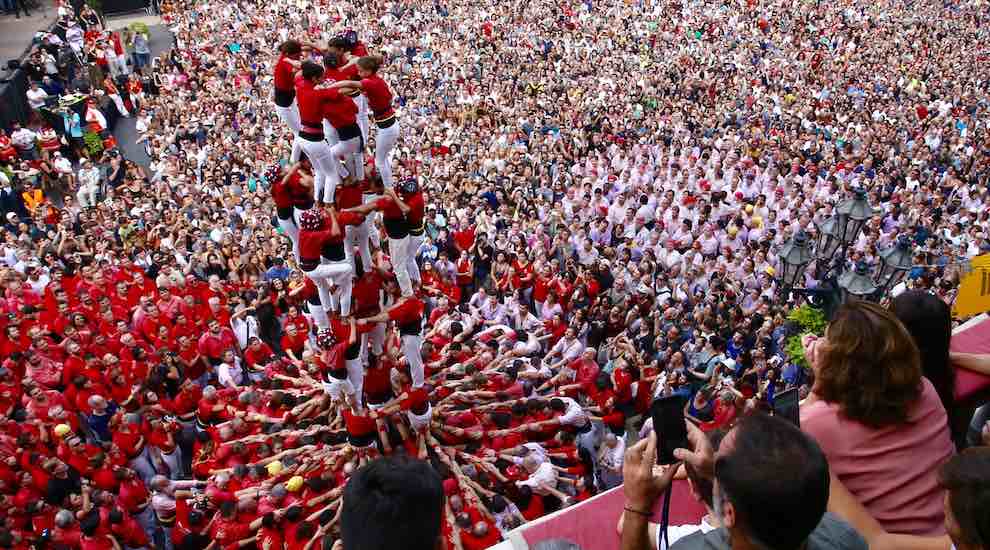
A special Catalan tradition is the construction of human towers—so-called “castells,” which means “castles” in Catalan. People build a vertical pyramid by climbing onto one another’s shoulders, relying entirely on trust, technique, and teamwork. The tradition dates back to the 18th century and originated in the Tarragona region, where it evolved from popular folk dances. Over time, groups known as “colles” began competing to build the tallest and most complex towers—seven or eight levels were soon achievable, demonstrating remarkable physical and mental discipline.
During the Franco era, castells were banned, as the dictator systematically suppressed all forms of regional culture in Catalonia and other regions such as the Basque Country. The use of local languages was also forbidden, and public expressions of Catalan identity were harshly restricted. As a result, the tradition survived only in private spaces. It was not until after Franco’s death in 1975 that castells experienced a powerful revival, quickly gaining greater popularity than ever before and becoming a visible symbol of cultural resistance and renewal.
For some time now, women have also been allowed to become castellers, a change that had a significant impact on the development of the towers. Thanks to their lower average body weight and increased inclusivity, it became possible to add one or even two additional levels. This evolution marked the beginning of the second golden age of castells from the 1980s onward, characterized by technical innovation and growing public interest.
Another important factor contributing to this second golden age is the strong social component of building human towers. On the one hand, construction requires strength, coordination, balance, courage, and constant awareness of others. On the other hand, it brings together people of different ages, genders, and social backgrounds, fostering a deep sense of belonging and cooperation. The younger generation in particular has discovered human tower building as a meaningful hobby, sparking a boom in dedicated clubs such as the “Castellers de Barcelona” (founded in 1969).
Especially impressive is the “enxaneta”—usually a small child who crowns the tower and raises an arm in greeting once the structure is complete. This moment is often accompanied by silence and applause and is considered a goosebumps-inducing experience for the entire audience, as it symbolically reflects both the success of the team and the cohesion of the community. Today, castells are recognized as part of UNESCO’s intangible cultural heritage and stand as a powerful, worldwide symbol of the strength, resilience, and unity of Catalan culture.
Castellers Street Art in Barcelona
In Plaça de Sant Miquel, right next to the City Hall on Plaça de Sant Jaume, you will find an interesting work of art related to this acrobatic tradition: a stylized version of a human tower. This monument to the castellers was created by the local artist, sculptor, and author Antoni Llena i Font (born in 1943 in Barcelona). He wanted to create a monument with twice the height of the human towers to represent the drive to always climb higher. He also sought to convey both the fragility and the strength of a castle.
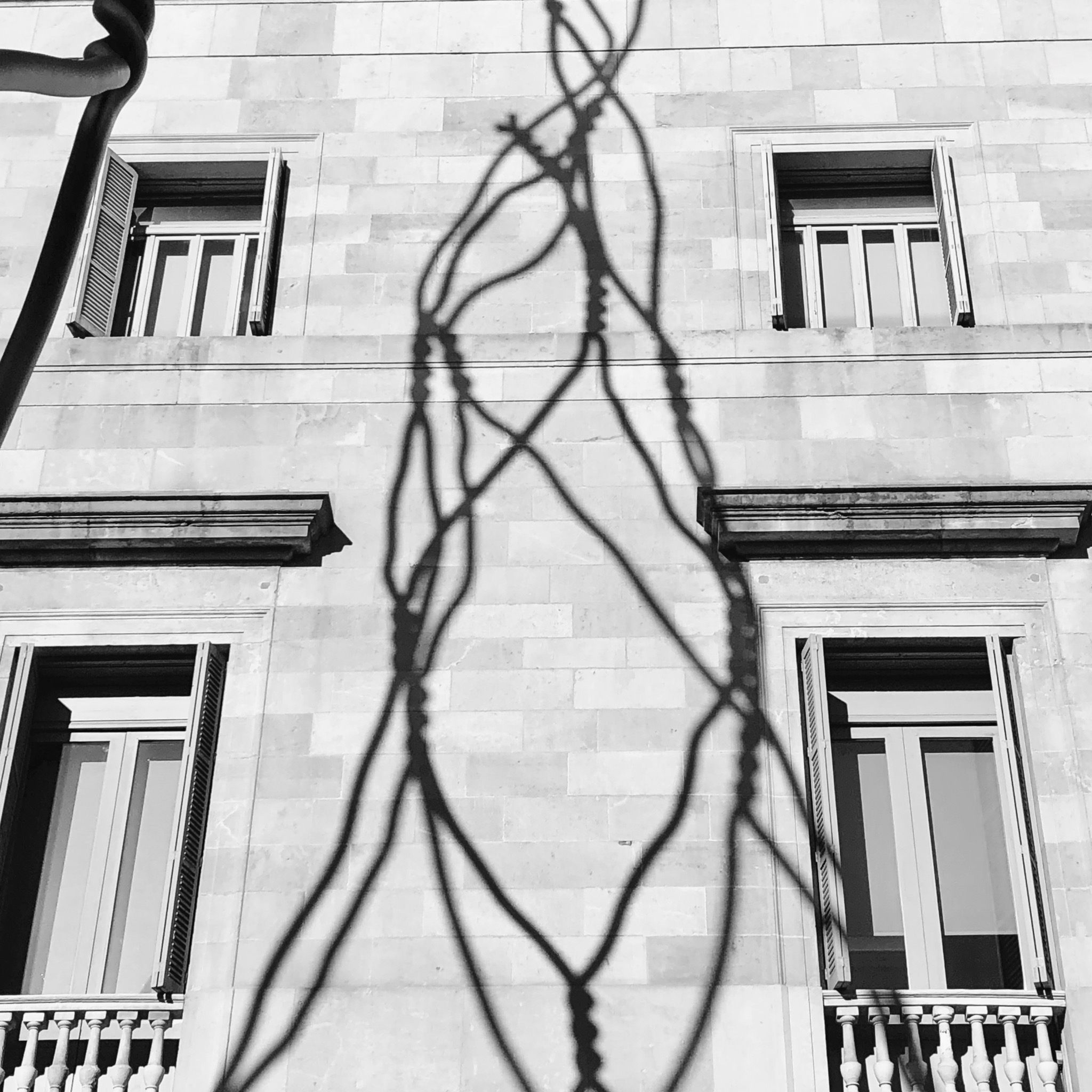
The shape of this sculpture is inspired by metal mesh. The idea came to the artist one day while he was buying cava, the Catalan sparkling wine. The wire cages that hold the corks of the bottles feature this kind of mesh. He noticed that the material “would make a very beautiful abstraction of a human tower, because it contains the idea of cohesion, fragility, and transparency.” So he took the wire cage back to his studio and began working on his project. Today, the sculpture is one of the most popular photo motifs in the old town and is perceived by locals and tourists alike as a modern symbol of Catalan identity.

Things to do in Barcelona
During the La Mercé weekend (24th of September) when Barcelona is celebrating her patron saint in a sequence of festive days you will be able to see the Castellers live. They will be competing on Plaça Sant Jaume. If you are in the city you should pass by and enjoy the show!
Find out more about street art during our Barcelona private tour: Explore hidden streets with a friend. This historic walking tour through back alleys of the old town lets you discover more than the usual. Little streets and squares off the beaten path. Escape the crowds and enjoy hidden gems!
Visit a school of Castellers in Barcelona. Many groups hold open rehearsals where visitors can watch and sometimes join the base formation. Clubs like Castellers de Barcelona welcome curious guests, and guided tours offer hands-on insight into this unique Catalan tradition of teamwork, balance, and community.