
Last Updated on January 16, 2026 by Christian Heide
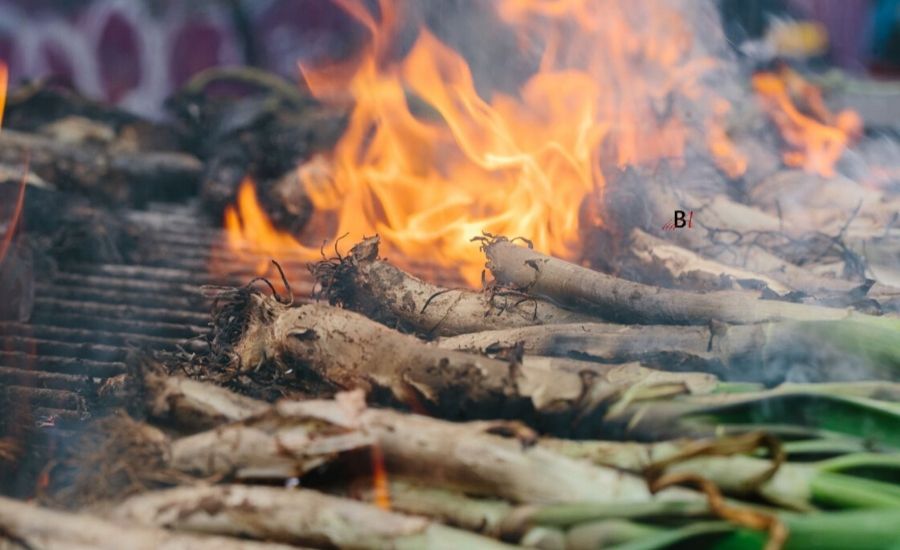
(main photo by Barcelonalemany.com)
One of the most important Catalan gastronomic traditions is the so-called Calçotada. Especially in the Barcelona region, you will find many culinary and social events during the cooler winter months, from January to March. It is common to go with friends or family at least once per season and enjoy good food, lively conversation, and the simple pleasure of being together around a long, festive table.
What is a Calçotada?
The calçot is a type of sweet spring onion from Catalonia. It is grilled over an open fire, preferably using charcoal fueled with grapevine clippings, which gives the onions a distinctive smoky flavor. After grilling, they are wrapped in newspaper to keep them warm and tender, then served and eaten with bare hands. One by one, you peel them and dip them generously in Romesco sauce, another Catalan specialty made from charred tomatoes, roasted red peppers, toasted almonds, olive oil, and bread, all puréed into a rich, flavorful sauce.
To complete the experience, pour wine from a porrón, a traditional kettle-shaped glass bottle, and enjoy classic pan con tomate alongside grilled meats and sausages that often follow the calçots. It’s messy, delicious, and unforgettable.



Where to go for a Calçotada
Try a typical masia, an old farm house, like Can Cortés or Can Cortada in the outskirts of Barcelona. During the Calçotada season you will need a reservation as the masias are very popular places among local people.
Restaurant Masia Can Cortés, Av. de Can Cortés, 36, 08196 Sant Cugat del Vallès
- This restaurant is picturesquely located in the Collserola Natural Park, a 45 minutes walk away from the Torre de Collserola, the iconic telecom tower on top of the Tibidabo mountain range. The restaurant and its terraces overlook the valley and you will be able to see the famous mountain of Montserrat with its monastery.
Can Cortada, Av. de l’Estatut de Catalunya, s/n, 08035 Barcelona, Spain
- This restaurant is easy to be reached by Metro (green line to Valldaura), thus ideally located within the Barcelona city limits.
The origins of the Calçotada
The Calçotada has its origins in the town of Valls, in the province of Tarragona, in southern Catalonia, and dates back to the late 19th century.
According to popular tradition, a farmer known as Xat de Benaiges accidentally discovered the calçot while cooking onions over an open fire. Some onions were burnt on the outside, but when he peeled off the charred layers, the inside was tender and sweet. He enjoyed them so much that he began cultivating onions using a special technique: repeatedly covering the growing shoots with soil (calçar in Catalan), which makes the white stem longer and more delicate. From this verb comes the name calçot.
Other Barcelona activities during the Calçotada season
Learn about Barcelona legends during our two-hours walking tour “Gaudí & Barcelona Legends”. We will make the connection from medieval Catalan history and legends to what inspired architects like Gaudí when designing the residential houses along the magnificent boulevard of Passeig de Gracia. From street pavement to lamp posts – all have a story that we want to tell you!
Try another culinary experience: Our Barcelona History & Food Experience lets you discover the variety of Spanish tapas while getting to know the Gothic Quarter and El Born that form the old town of Barcelona.
Read about vegetarian restaurants in Barcelona – we have made a selection of 5 top restaurants that we enjoy.