Last Updated on August 22, 2026 by Christian Heide
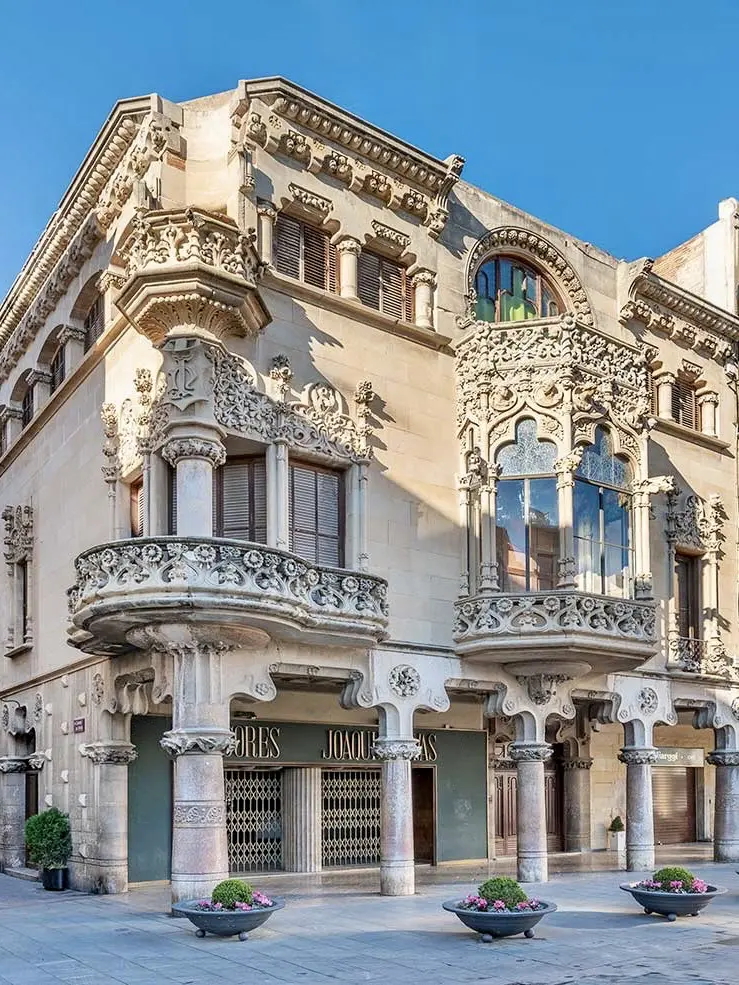
When people think of Catalan Modernism, Barcelona immediately comes to mind: the Sagrada Família, Park Güell, Casa Batlló, or Casa Milà. But just about 100 kilometers west of Barcelona, the city of Reus holds an architectural gem that even many Barcelona connoisseurs have yet to discover. Casa Navàs is one of the most extraordinary Modernism buildings in Catalonia.
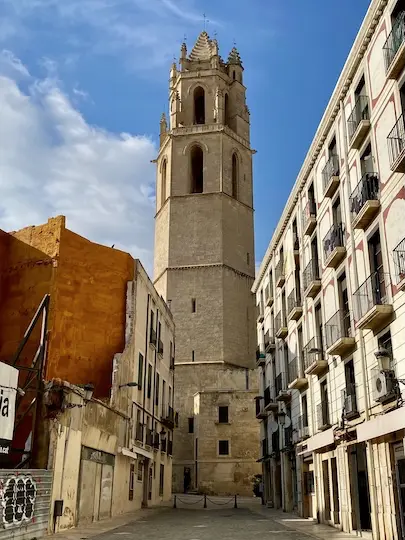
We took a day trip from Barcelona to this small Catalan city, the birthplace of the famous architect Antoni Gaudí. In the 19th and early 20th centuries, Reus flourished as a significant trade and economic hub. As a result, much like Barcelona, it boasts a wealth of unique Modernism buildings. This surprised us, as we hadn’t heard much about the city before. There’s even a Ruta del Modernisme – a self-guided route leading to 26 notable Art Nouveau buildings, all marked with plaques on the ground. For architecture lovers, Reus is definitely worth a visit.
We booked a guided tour – offered simultaneously in Spanish and English. The guide switched between the two languages regularly, ensuring everyone received all the essential information. During the nearly hour-long tour, we had plenty of opportunities to ask questions. As soon as we stepped inside Casa Navàs, it felt like we were embarking on a journey through time.
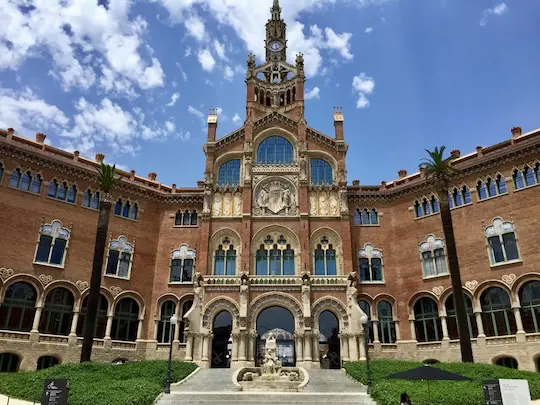
The building was designed by Lluís Domènech i Montaner, one of the most significant architects of the era. He was already familiar to us, as we had seen many of his spectacular works in Barcelona, such as the breathtaking Palau de la Música concert hall, the astonishing Sant Pau Hospital, and the family residence Casa Lleó Morera. While the façade may appear slightly less dramatic than Gaudí’s famous houses, its true magic unfolds inside.
A House Built with an Almost Unlimited Budget
The story of Casa Navàs begins around the turn of the 20th century. At the time, Reus was a wealthy and economically significant city, second only to Barcelona as one of Catalonia’s most important hubs. Joaquim Navàs, a successful textile merchant, commissioned Lluís Domènech I Montaner – alongside his wife, Pepa Blasco – to design an extraordinary residential and commercial building right on Plaça del Mercadal, the central square of Reus.

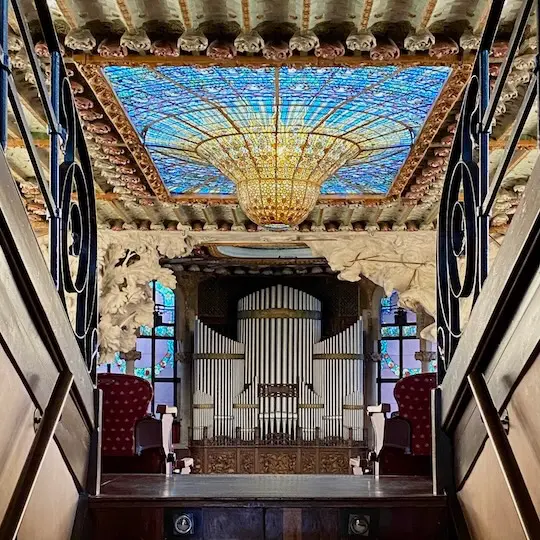
Domènech i Montaner was granted extraordinary creative freedom and a generous budget. Between 1901 and 1908, what emerged was not an ordinary townhouse but a Gesamtkunstwerk – a total work of art where architecture and craftsmanship seamlessly blend. To achieve this, the architect collaborated with some of the finest artists and artisans of his time, including Gaspar Homar, who handled furniture and woodwork, and Lluís Bru, a master of mosaics.
The result? An artificial garden sculpted from stone, glass, and color.
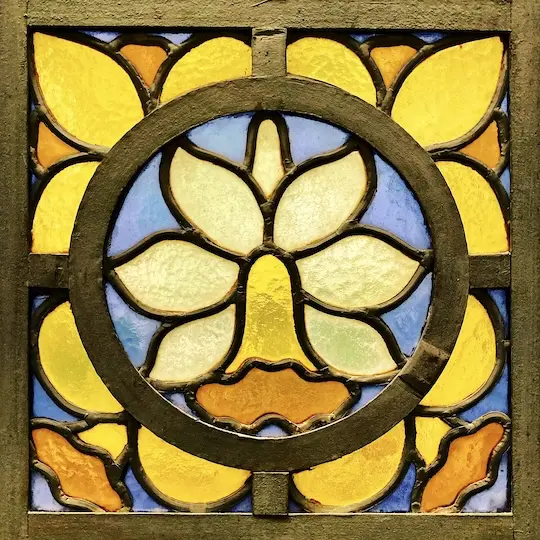
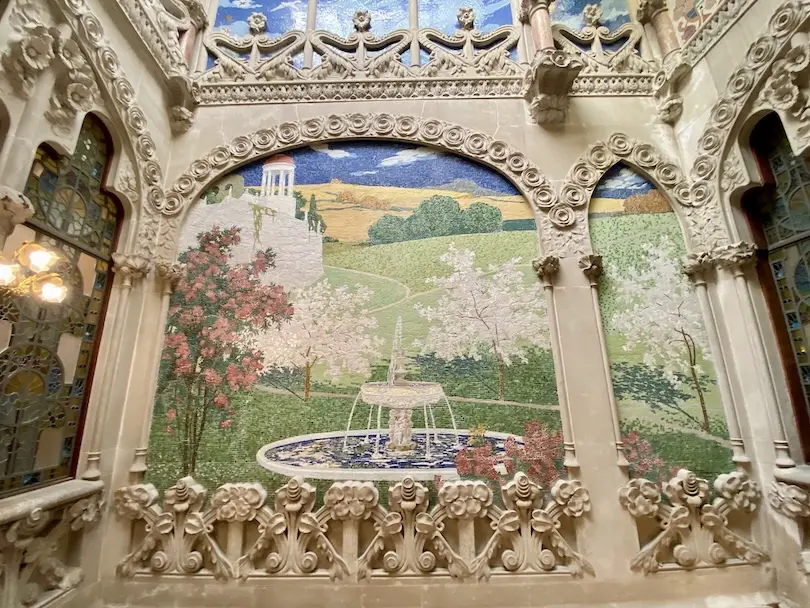
From the very entrance, it’s clear that Casa Navàs is unlike any other. Flowers and leaves appear everywhere – emerging from the stone, embedded in mosaics, adorning woodwork, and gracing the intricate stained-glass windows. The stained-glass windows are particularly stunning, with the preserved glasswork covering an impressive 200 square meters. The light constantly transforms the spaces, shifting the colors depending on the time of day. Adding to the richness are mosaics, ceramics, stucco work, silk wallpapers, lamps, and exquisitely carved furniture.
Casa Navàs isn’t just a building to visit – it’s an experience. You need to take your time to uncover the countless small details hidden within.
The Staircase – The First Major “Wow” Moment
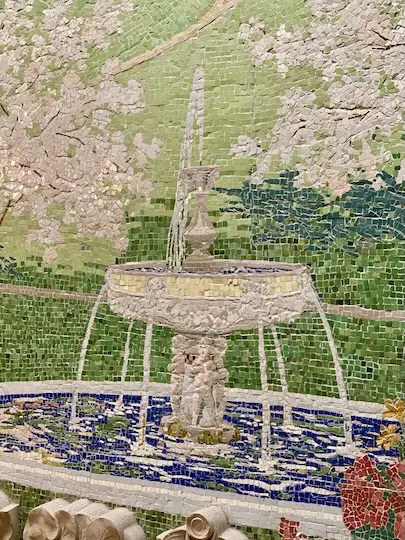
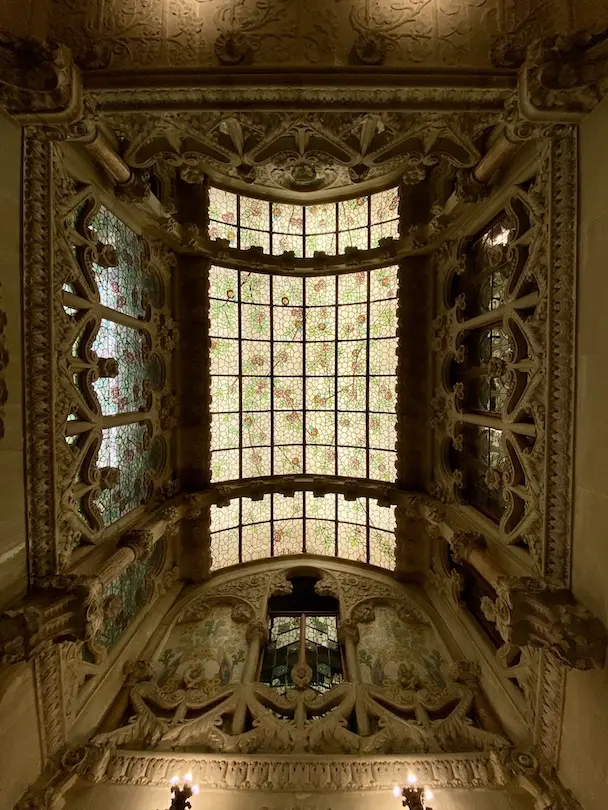
One of the areas that left us particularly in awe was the grand staircase. Here, mosaics, ceramics, woodwork, and glass merge into a single, breathtaking decorative composition. Above the staircase, a large skylight allows natural light to flood the space. The walls feature a vibrant mosaic garden, and as with the rest of the house, it pays to look beyond the obvious. Those who gaze upward will continuously discover new, intricate details.


Where Architecture, Art, and Everyday Life Merge into a Masterpiece
The interior of Casa Navàs is a stunning Gesamtkunstwerk of Catalan Modernism, offering a fascinating glimpse into the life of the wealthy Navàs family at the turn of the 20th century. In the living room, intricate woodwork, silk wallpapers, decorative lamps, and furniture come together in perfect harmony. The large gallery overlooking Plaça del Mercadal fills the space with light, while numerous original furnishings – including the family’s first telephone – remind visitors of the modern comforts they enjoyed.
Casa Navàs was both a home and a business. The ground floor housed the family’s textile shop, while the kitchen was connected to it via a dumbwaiter. In other ways, too, the house was ahead of its time: electric lighting, a telephone, and an advanced heating system made it exceptionally modern. The private rooms continue the luxurious style. In the main bedroom, artistic glass and wood elements separate the living and sleeping areas, while the fully equipped bathroom – complete with a bathtub, sink, and bidet -reflects the family’s high standard of living. A large stained-glass window bathes the room in colorful light.
On the terrace, architecture and art merge once again. Ceramic planters, wrought-iron structures, and vibrant mosaics adorn the outdoor space. The mosaics tell historical stories, including the departure of King Jaume I from Salou to conquer Mallorca and an idealized depiction of Thessaloniki. Casa Navàs impressively demonstrates that the decorative elements of Modernisme were not just for beauty—they also tell stories, reference historical events, and reflect the cultural interests of its inhabitants. It’s this interplay of architecture, craftsmanship, technology, and history that makes a visit to Casa Navàs such a special experience.
The Dark Side of History
As magnificent as Casa Navàs appears today, its history has a tragic chapter. During the Spanish Civil War, Reus was bombed multiple times. In 1938, a bomb struck Casa Navàs, destroying much of the roof and parts of the second floor. The corner tower, which originally gave the façade its elegant silhouette, was severely damaged. For many years, the building had to endure with a scarred façade. In 2020, part of the destroyed gable was reconstructed, and in 2025, the tower was finally restored—87 years after its destruction. With these restorations, Casa Navàs has largely regained its original external appearance. Knowing this history, one looks at the façade with a newfound appreciation.
Our Verdict
What we love most about Casa Navàs is its location in the heart of Reus, away from Barcelona’s crowded tourist paths. The city, Gaudí’s birthplace, is home to many other impressive Modernisme buildings, but Casa Navàs undoubtedly stands out as one of the highlights. Unlike many famous structures in Barcelona, here you can experience the architecture in a much more peaceful setting.
For us, Casa Navàs is one of those buildings you want to return to after your first visit. Everywhere you look, there’s something new to discover—a mosaic, a stained-glass window, a carved wood detail, or an unusual ornament. It’s this abundance of detail that makes it so uniquely captivating. Anyone visiting Reus should not miss this extraordinary Modernisme gem.
How to Get from Barcelona to Reus
The easiest way to reach Reus from Barcelona is by taking a regional train. Trains depart from major stations like Barcelona-Sants, Passeig de Gràcia, and Estació de França, with the journey to Reus taking approximately 1.5 hours. Depending on the connection and ticket type, a one-way trip costs around €9 to €15.
From Reus train station, it’s about a 10 to 12-minute walk to Plaça del Mercadal, where Casa Navàs is located. For a day trip from Barcelona, the train is a convenient and relaxed way to explore Casa Navàs and other attractions in Reus.