Last Updated on July 15, 2026 by Christian Heide
Just 25 minutes by train from Barcelona lies Colonia Güell, a fascinating testament to visionary industrial culture and architectural innovation. At the end of the 19th century, the industrialist Eusebi Güell relocated his textile factory to the outskirts of the city and created an entire village for his workers – a social experiment with state-of-the-art amenities for its time, including even its own doctor.
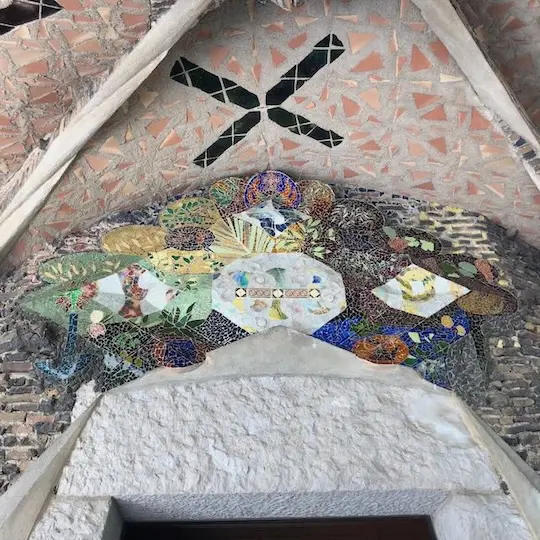
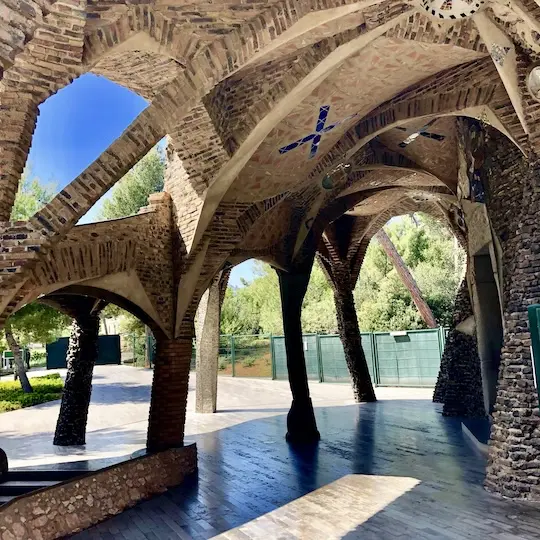
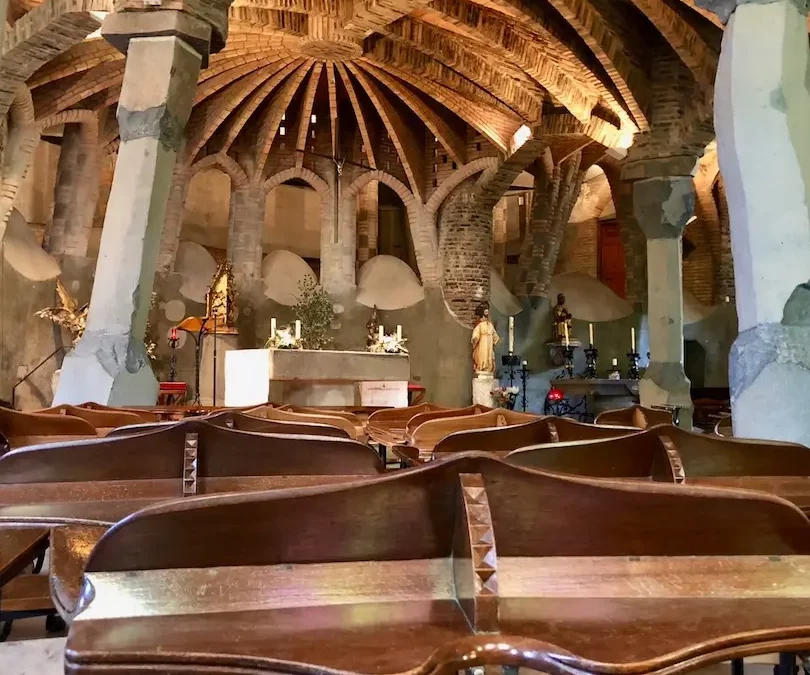
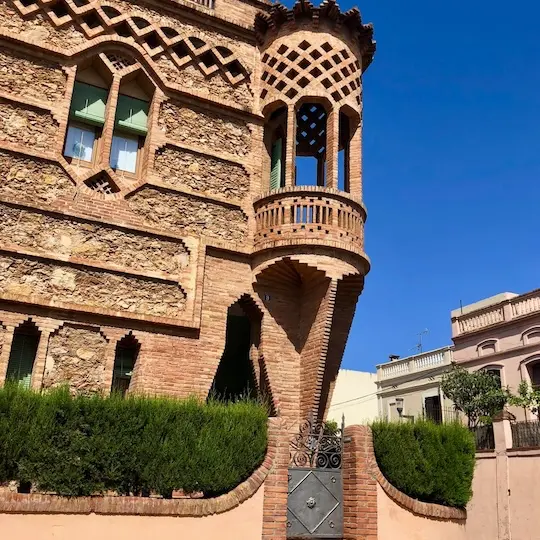
When visiting this unique place, you will encounter magnificent Modernisme buildings, from residential houses to Gaudí’s unfinished church. Only the crypt was completed before Güell halted funding in 1914 and Gaudí devoted himself entirely to his life’s work, La Sagrada Família. Colonia Güell is a place that impressively combines history, architecture, and industrial heritage.
A short history of Colonia Güell
The Catalan industrialist Eusebi Güell, a visionary of his time, relocated his main activities from Barcelona to his private estate, Can Soler de la Torre, in the municipality of Santa Coloma de Cervelló at the end of the 19th century. From 1890 onwards, not only a modern textile factory was built there, but also a residential area for workers and their families – a social experiment designed to combine quality of work and life. Houses and rooms were larger than the average – with big windows – so that the families could enjoy comfortable living conditions.
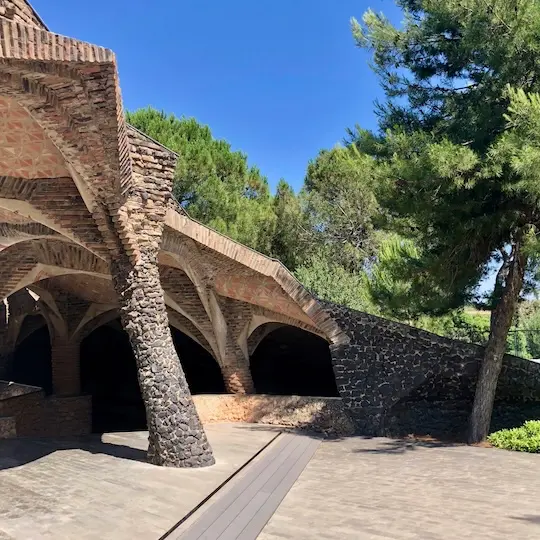
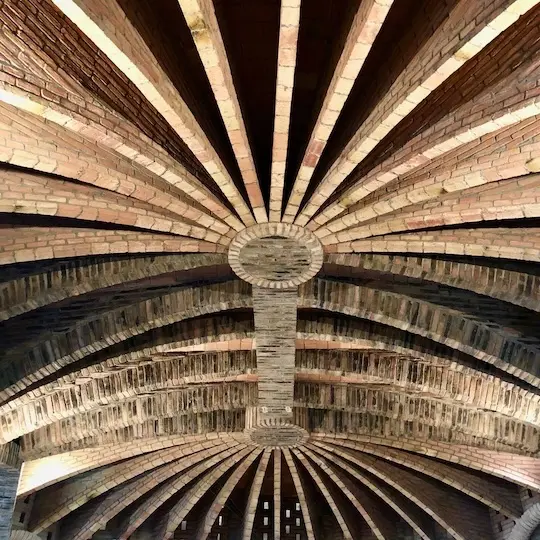
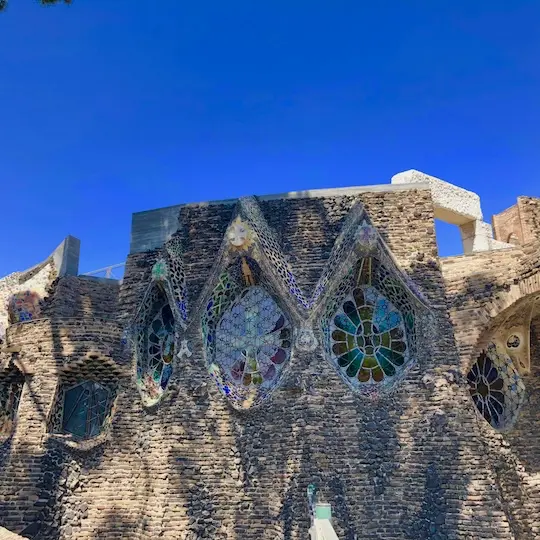
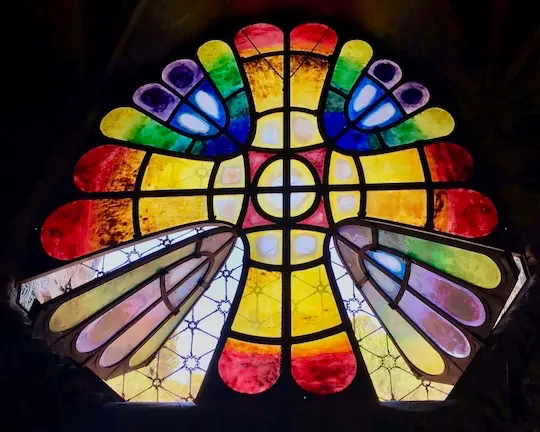
In 1898, Güell commissioned the renowned architect Antoni Gaudí to build a church for the colony. However, financial difficulties forced the industrialist to end the project prematurely. Gaudí completed only the crypt, which, due to the hilly landscape, was partly constructed underground. His aim was to create a harmonious connection between architecture and nature – a central feature of Catalan Modernisme. Today, the crypt is considered a masterpiece and a precursor to his later works, such as the Sagrada Família.
During the Spanish Civil War (1936–1939), the factory was nationalized, but after the war the state returned it to the Güell family. In 1945, the family ultimately decided to sell the entire Colònia Güell. Today, the site is an important cultural heritage landmark, attracting visitors from all over the world who come to admire Gaudí’s unique architecture and the colony’s social history.
Güell – Gaudí´s likeminded patron and friend
Eusebi Güell visited the World’s Fair in Paris in 1878, where he was captivated by an intricately designed display case created for a glove maker from Barcelona. His search for the creator of this piece led him to Antoni Gaudí – the beginning of a deep friendship between two visionary minds who would shape the architectural history of Catalonia.
Güell recognized Gaudí’s radical design ideas as groundbreaking and became his most important patron. With the construction of the Palau Güell, a breathtaking family residence, Gaudí established himself among Barcelona’s upper class and no longer had to worry about commissions. This was followed by the Güell Winery, the Güell Pavilions, and the famous Park Güell – originally a failed real estate project that is now one of the city’s most visited attractions. Their final joint work, the church of Colònia Güell, remained unfinished.
After Güell’s death in 1918, Gaudí lost not only a close friend but also a crucial supporter. Deeply affected, he withdrew to the workshop of the Sagrada Família, where he worked tirelessly on his masterpiece until the end of his life – a legacy that has immortalized them both to this day.
Things to do in Barcelona
- Hop on the train (S3 / S4 / S8 / L8) in the morning at Plaça Espanya and visit Colonia Güell. An audio guide can be purchased and will lead you through the village and the crypt. There are several restaurants that offer decent lunch menus. Be back in Barcelona in the afternoon.
- Learn more about Gaudí in Barcelona during our private tour Gaudí & Barcelona Legends – Immerse with us into captivating legends from the past that can be seen everywhere in the city once you know them. Understand how architects in those days were inspired by them and left a lasting impact on Barcelona.